Prayer

Back to God & Humanity

God in Search of Man
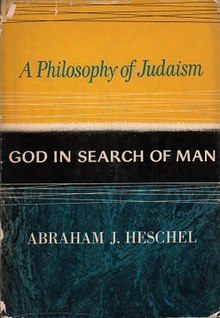
God in Search of Man: A Philosophy of Judaism (1955):

This book examines the dynamics of the human-divine relationship. Heschel explores the ways in which individuals can encounter God through prayer, ethical living, and religious commitment.

Related Content

Heschel at Reinhold Niebuhr's Funeral Every Word Has Power: The Poetry of Rabbi Abraham Joshua Heschel The Eternal Light Interview with Carl Stern
Back to Justice

The Prophets

Book Cover-The Prophets, two colors red and gold

The Prophets (1962):

Heschel offers a comprehensive study of the Hebrew prophets in this influential work. He highlights the prophetic call to social justice and ethical behavior, emphasizing the prophets’ role in challenging injustice and promoting a deeper understanding of God’s will. This work was adapted from his dissertation Das prophetische Bewuβstein (Prophetic Consciousness).

Related Content

Heschel in Ottawa, 1968 or 1969, Exploring "Shabbat as Spiritual Sanctuary" This framework - inspired by Heschel's radical amazement with the world in its entirety - is most likely why I became the person I am today. Sofia Freudenstein He imbued in us a sense of wonder and a commitment to justice. Lapidus & Myles
Back to Justice

Who Is Man?

Book Cover-Who is Man

Who Is Man? (1965)

Heschel reflects on the nature of humanity and the purpose of existence in this philosophical work. He discusses the unique qualities that distinguish humans from other beings and explores the ethical responsibilities that come with human existence.

Related Content

The Spiritual Audacity of Abraham Joshua Heschel from "On Being" Here is this thinker whose words shaped the essence of how I think about Judaism. Rabbi Pamela Barmash, PhD We, his readers, Jewish and Christian, stood in wonder before it – not before him, but before his ability to “walk with God.” Rabbi David R. Blumenthal, PhD
Back to Prayer

A Passion for Truth

A Passion for Truth (1973)

This book was published posthumously and is significantly autobiographical. It compares and contrasts the life and thought of the enigmatic Hasidic Rebbe Menahem Mendl of Kotzk with that of the Danish philosopher Søren Kierkegaard. A secondary contrast that is that between the Baal Shem Tov (considered the founder of Hasidism) and the Kotzker Rebbe, a duality that Heschel maps onto the mind and soul.

Related Content

Heavenly Torah The Earth is the Lord's In The Sabbath, Heschel attempts to reawaken the spirituality and holiness of the Sabbath, and impart the wisdom and gifts it can bring to those who observe the Sabbath. Rebecca Katz
Back to Justice

Moral Grandeur and Spiritual Audacity

Book Cover-Moral Grandeur and Spiritual Audacity, with bright image of trees

Moral Grandeur and Spiritual Audacity: Essays (1996)

This collection of essays, compiled and edited by Heschel’s daughter Dr. Susannah Heschel, touches on Heschel’s moral and spiritual reflections on various topics, such as social justice, ethical responsibility, and the moral challenges of the modern world. Heschel’s impassioned voice encourages readers to embrace moral grandeur and spiritual audacity in their lives.

Related Content

King and Heschel at the Rabbinical Assembly Conference "No Religion is an Island" Invitation Man's Quest for God
Back to Prayer

Heavenly Torah

Heavenly Torah: As Refracted Through the Generations (2005)

This work is a translation (with commentary for the reader) of Heschel’s three-volume work in Hebrew on the different theologies (Torah Min Hashamayim) of the Rabbis of the Talmudic period and how those theologies lived on and confronted one another in later periods. The first two volumes of the original work were published in 1962 and 1965, respectively. The third Hebrew volume was published posthumously in 1990. The English translation by Rabbi Gordon Tucker was published in 2005.

Related Content

In The Sabbath, Heschel attempts to reawaken the spirituality and holiness of the Sabbath, and impart the wisdom and gifts it can bring to those who observe the Sabbath. Rebecca Katz Rabbi Heschel is quoted as having said we must fight nihilism. He meant it then, and if he were alive today, he would mean it now. Jane West Walsh, EdD Whatever the yearning is that throbs within us—whether or not we call it the Holy Spirit—it is our responsibility to make it live. Edward K. Kaplan