Justice

Back to Heschel's Influence

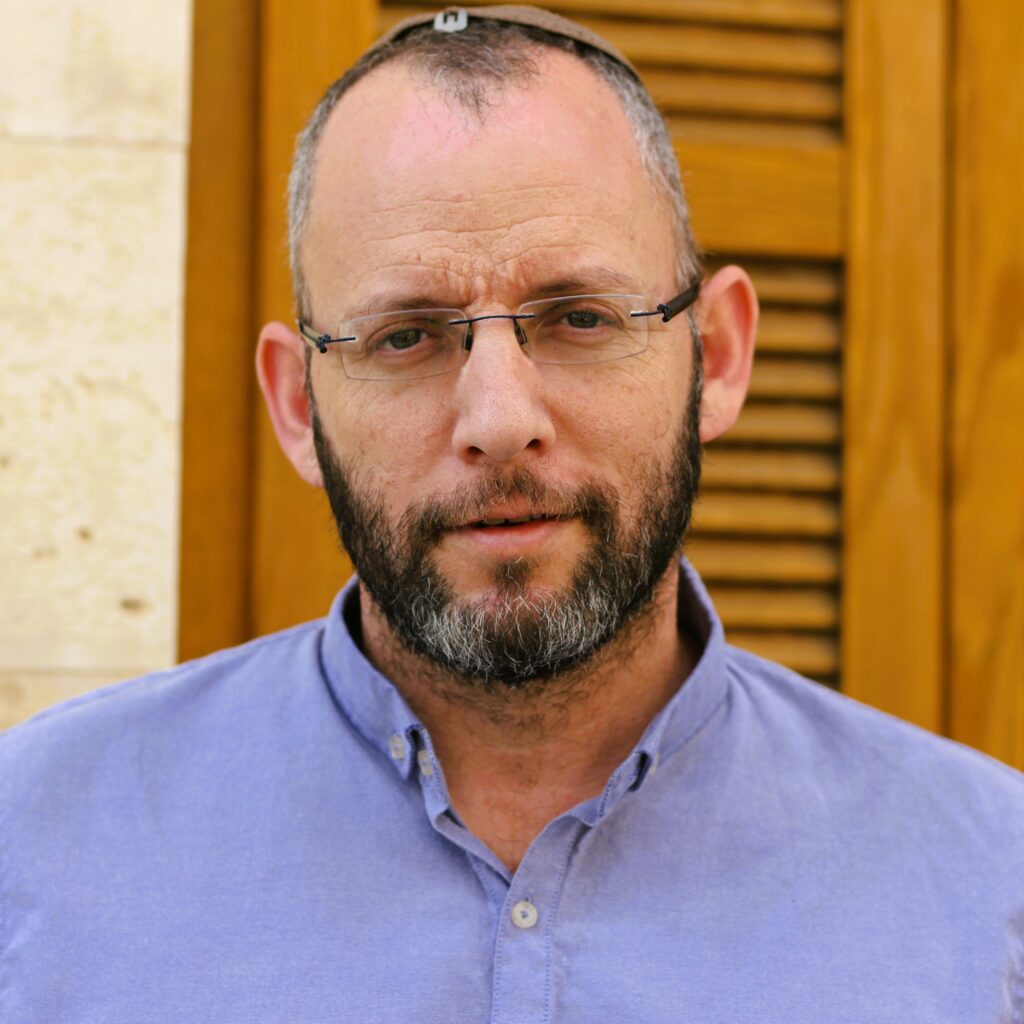
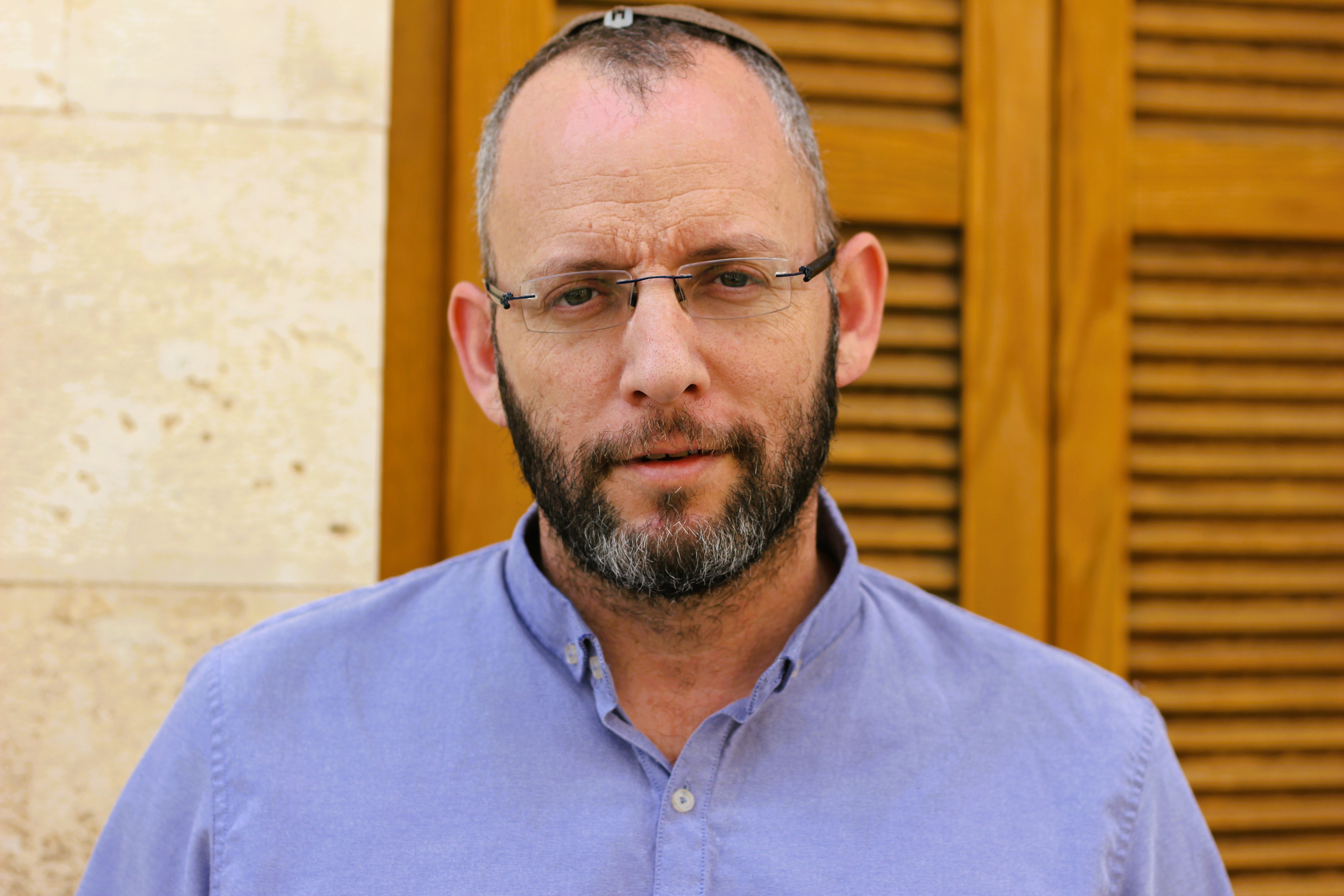
Dr. Dror Bondi

His thought illuminates my way and gives me hope that at the end of the tunnel, there is light.
Schechter Institutes
Jerusalem, Israel
A Jewish Perspective

How did you first encounter Abraham Joshua Heschel’s work?

On 2002, after a few years of studying in Hesder yeshivot, I joined the family business and became a bored insurance agent. After about a year, I decided to devote one day a week to master’s studies at Bar Ilan, and there I heard a course by Prof. Ephraim Meir on Heschel and Buber. I wrote a seminar paper to compare them, and then I asked Prof. Meir to write a master’s thesis, which would include a comparison between what I wrote about Buber and Rabbi Soloveitchik. Prof. Meir claimed that I should write about Heschel. I started writing and suddenly my eyes were opened. I met Heschel and he changed my life.

How did Heschel and his thinking inspire your work, religious life, or civic engagement?

Before meeting Heschel, I felt that I had a pretty good understanding of the knowledge map of Judaism, but he made me realize that I was looking at it from the wrong perspective. For me, it was a map of mere ethnic and halachic knowledge; Heschel taught me to look at it from God's point of view.

I was born in a hard core settlement in the Jewish-democratic state, and since my youth I felt that there was a tension between the Jewish and the democratic. The murder of PM Rabin shocked me. Because of the world in which I grew up, I was not surprised by the murder, but I was surprised that Israeli society was surprised. I suddenly realized that my Jewishness and my Israeliness cannot live together. When I met Heschel, I understood that there is another Judaism and that mere ethnic and halakhic Judaism could be idolatrous. The most significant lines in his thought for me are:

“What is an idol? Any god who is mine but not yours, any god concerned with me but not with you, is an idol. Faith in God is not simply an afterlife-insurance policy. Racial or religious bigotry must be recognized for what it is: blasphemy . . . God is every man’s pedigree. He is either the Father of all men or of no man. The image of God is either in every man or in no man.”

—”Religious and Race,” The Insecurity of Freedom

Heschel taught me a new (or maybe ancient) interpretation of the word “God,” every time it appears in the sources—and suddenly the whole of Judaism was illuminated in a new light. God is not an absolute other who gives absolute validity to one's ethnicity and religion; He is someone who cares about all human beings and who invites us all into an interpersonal relationship with him. He is a kind of utopian parent, whose light calls all people to live in brotherhood, sisterhood, or solidarity.

What of Heschel lives in you?

I don’t know what to say. I simply feel the great privilege to be his chasid. He is my rebbe, and I try to follow his path, which is very demanding, I must say. Too many times I don’t succeed, but his thought illuminates my way and gives me hope that at the end of the tunnel, there is light.
Gallery

Related Content

Whatever the yearning is that throbs within us—whether or not we call it the Holy Spirit—it is our responsibility to make it live. Edward K. Kaplan I 'met' Rabbi Heschel in 1987, when the prison rabbi where I was incarcerated, Rabbi Mel Silverman, introduced me. Rabbi Mark Borovitz How could one ever top an invitation from a brilliant scholar, my most unforgettable professor? Rabbi Moshe Pomerantz 
Back to Heschel's Influence

Matthew Bar

He articulated my personal beliefs about Judaism and God.

Bible Raps
Philadelphia, Pennsylvania
A Jewish Perspective

How did you first encounter Abraham Joshua Heschel’s work?
I started getting interested in Jewish thought after trip to Israel on Livnot Birthright. Heschel’s Man In Search of God and other works were suggested. I was a philosophy major and his thought was attractive in that regard and how well he articulated my personal beliefs about Judaism and God. Reading Heschel validated my initial interest in Jewish thought and led me to understand that Judaism is where it’s at for me. While I grew up Jewish in Iowa city, Iowa, I never really delved deep into Jewish thought until Heschel. In doing so I said to myself "Wow, I am really am Jewish!"

How did Heschel influence your life, thinking, and/or work? What of Heschel lives in you?
His philosophy of Judaism in Man’s Quest for God and The Prophets, along with his lectures from 1968 and 1970, were essential for the development of my Jewish identity. His partnership with MLK was also important because I spend so much time with Black people as a hip hop artist. I use Heschel to contextualize my magnum opus with samples from his lectures on my album Best Bible Rapper Alive.

Gallery

  • https://open.spotify.com/track/4CGLRm6VhpSQTQaZPick5K?si=79d06181f6cd4fc7

Related Content

His words are as profound and meaningful in 2023 as they were in 1963. Dr. Shawn Parry-Giles King and Heschel at the Rabbinical Assembly Conference He was given the gift of prophecy but also the gift of language to translate into human terms the divine concern. Rabbi Ernesto Yattah
Back to Justice

The Prophets

Book Cover-The Prophets, two colors red and gold

The Prophets (1962):

Heschel offers a comprehensive study of the Hebrew prophets in this influential work. He highlights the prophetic call to social justice and ethical behavior, emphasizing the prophets’ role in challenging injustice and promoting a deeper understanding of God’s will. This work was adapted from his dissertation Das prophetische Bewuβstein (Prophetic Consciousness).

Related Content

His words are as profound and meaningful in 2023 as they were in 1963. Dr. Shawn Parry-Giles The Insecurity of Freedom Heschel at Reinhold Niebuhr's Funeral
Back to Justice

Who Is Man?

Book Cover-Who is Man

Who Is Man? (1965)

Heschel reflects on the nature of humanity and the purpose of existence in this philosophical work. He discusses the unique qualities that distinguish humans from other beings and explores the ethical responsibilities that come with human existence.

Related Content

Joining the JTS Faculty Rabbinical models such as Rabbis Heschel and Marshall inspired my decision to become a rabbi—a rabbi who takes part in “political” topics. Rabbi Mauricio Balter Rabbi Elliot Cosgrove 50th Yahrzeit Sermon
Back to Justice

Moral Grandeur and Spiritual Audacity

Book Cover-Moral Grandeur and Spiritual Audacity, with bright image of trees

Moral Grandeur and Spiritual Audacity: Essays (1996)

This collection of essays, compiled and edited by Heschel’s daughter Dr. Susannah Heschel, touches on Heschel’s moral and spiritual reflections on various topics, such as social justice, ethical responsibility, and the moral challenges of the modern world. Heschel’s impassioned voice encourages readers to embrace moral grandeur and spiritual audacity in their lives.

Related Content

In my previous religious life, praying for me was about technique, but without intention. Heschel changed my attitude in prayer. Sefi Dahan Had it not been for him, I would have done less, cared less, thought less, lived less. Rabbi Michael Marmur, PhD The Sabbath
Back to Justice

The Insecurity of Freedom

Book cover-The Insecurity of Freedom, black jacket with white text.

The Insecurity of Freedom (1966)

This collection of essays explores a range of theological, philosophical, and ethical topics. The essays reflect Heschel’s deep concern for the moral challenges of the time, particularly in the context of the Vietnam War and the broader social and political issues of the 1960s.

The central theme of the book revolves around the tension between freedom and security. Heschel examines the complex relationship between individual freedom and the responsibilities it entails. He discusses the moral dilemmas faced by individuals in a society marked by injustice, violence, and ethical uncertainties.

Related Content

"If Not Now" Play from the Sabbath Variations Heschel and the Vietnam War Here is this thinker whose words shaped the essence of how I think about Judaism. Rabbi Pamela Barmash, PhD